

Norwood hair loss scale
The Norwood scale is a widely used hair loss classification system that helps surgeons track the typical progression of hair loss. It is particularly useful for assessing male pattern baldness, as it outlines the key stages of this condition and guides potential treatment options. The scale categorizes male pattern baldness into seven distinct stages.
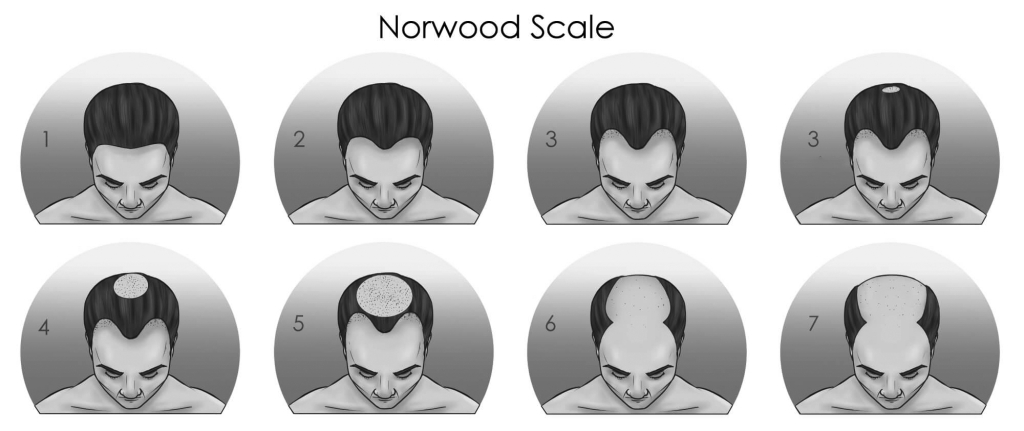
Male pattern baldness is a common form of hair loss experienced by adult men. This condition progresses through distinct stages and often leads to a similar appearance among those affected. The progression of male pattern baldness is generally predictable, and its stages can be classified using the Norwood (or Hamilton-Norwood) hair loss scale.
In the later stages, men may lose most of the hair at the front of the scalp, which can impact self-confidence. This widely recognized condition is primarily influenced by genetics and aging, making it difficult to prevent. Given its prevalence, modern medicine has developed a variety of treatments and solutions to address male pattern baldness.
How many grafts do I need?
The number of grafts required is directly linked to your hair loss pattern. Let’s explore the key features of each Norwood stage and see how many grafts are typically needed to achieve a natural, full appearance!
STAGE 1 | 0 – 1000 GRAFTS
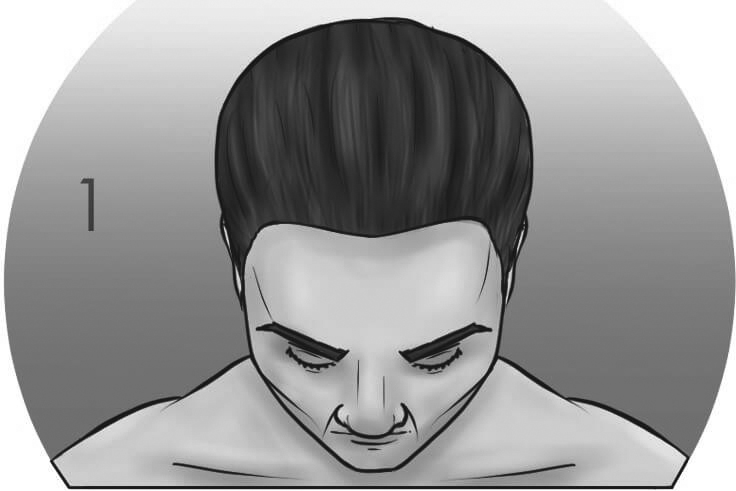
Norwood Stage 1 represents the baseline stage of male pattern baldness. At this point, there are no visible signs of hair loss, and the natural hairline remains intact.
Stage 1 solution: If there are concerns about potential hair loss, patients can consider topical or oral medications, or opt for PRP (Platelet-Rich Plasma) treatment to maintain hair density. If needed, up to 1,000 grafts can be implanted to slightly enhance or reshape the hairline once hair loss is stabilized.
STAGE 2 | 1000 – 1500 GRAFTS
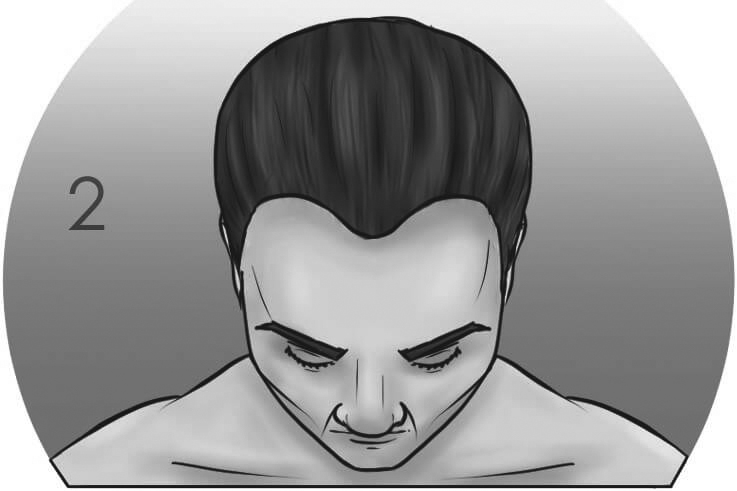
Norwood Stage 2 marks the early signs of male pattern baldness, with the hairline beginning to recede slightly.
Stage 2 solution: If hair loss has stabilized, 1,000 to 1,500 grafts can be transplanted to restore the desired hairline. If hair loss is still progressing, density can be preserved through topical or oral medications, or regular PRP (Platelet-Rich Plasma) treatment sessions.
STAGE 3 | 2000 GRAFTS
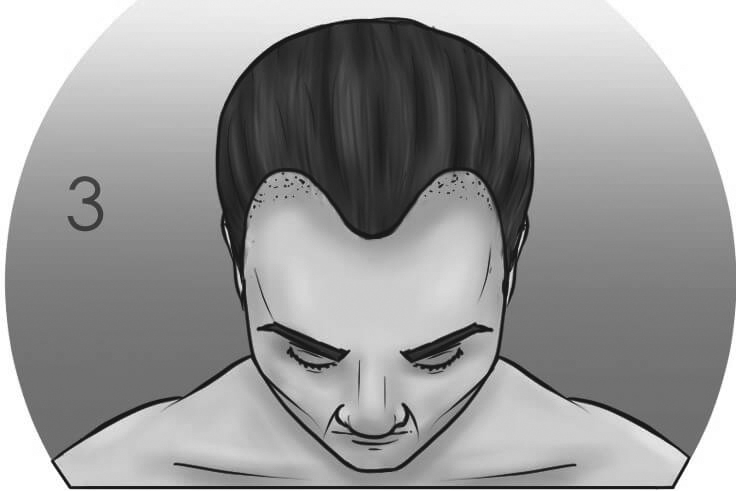
Norwood Stage 3 is often when men begin to become concerned about their hair appearance. At this stage, the hairline may start forming a V, M, or U shape, depending on genetics.
Stage 3 solution: This is typically when patients start considering a hair transplant, as medications alone may no longer maintain the hairline. Around 2,000 grafts can usually achieve a natural, dense hairline. PRP treatments and medications can also help preserve the density in the crown area.
STAGE 4 | 3000 – 5000 GRAFTS
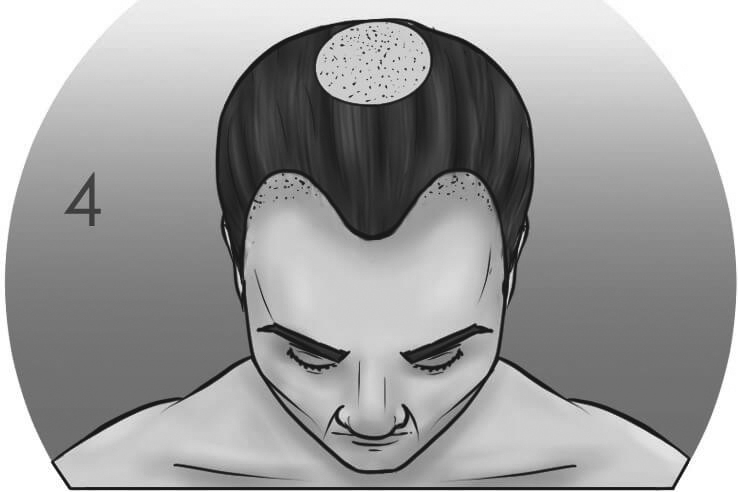
Norwood Stage 4 sees hair loss advancing at both the hairline and the vertex, leaving a narrow band of hair between these areas. If the top of the head is largely unaffected, the hairline may form a deeper U shape.
Stage 4 solution: A minimum of 3,000 grafts is typically needed for full coverage. If the donor area is healthy and hair loss has stabilized, up to 4,000 grafts can be transplanted to achieve a dense appearance. Continued use of medications and PRP treatments can help support and enhance the results of the hair transplant.
STAGE 5 | 3500 – 4500 GRAFTS
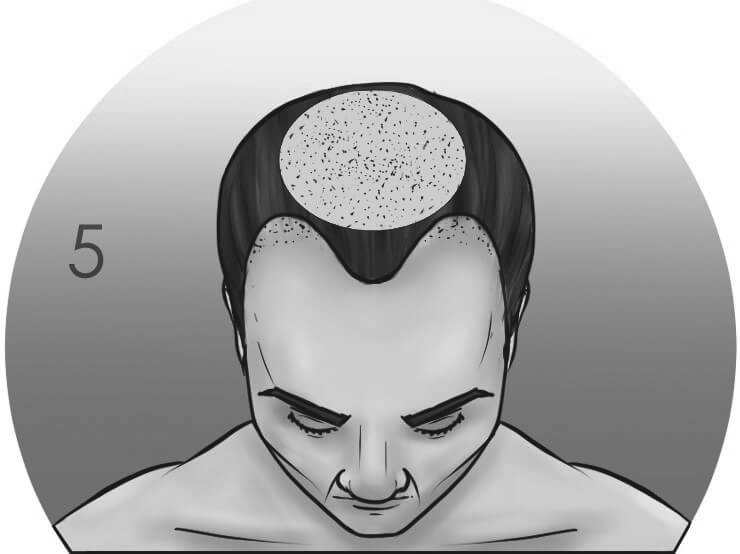
Norwood Stage 5 is characterized by more rapid and pronounced hair loss. The band of hair between the balding areas becomes thinner, and existing hair grows sparser. If the band disappears entirely, the hairline recedes further.
Stage 5 solution: At this stage, a minimum of 3,500 grafts is needed to restore a strong frontal hairline, while 4,000 grafts can provide full coverage. If the donor area is robust, up to 5,000 grafts can be transplanted for a natural, dense appearance. Continued use of medications and PRP treatments can help maintain and support the transplanted hair.
STAGE 6 | 4500 – 6000 GRAFTS
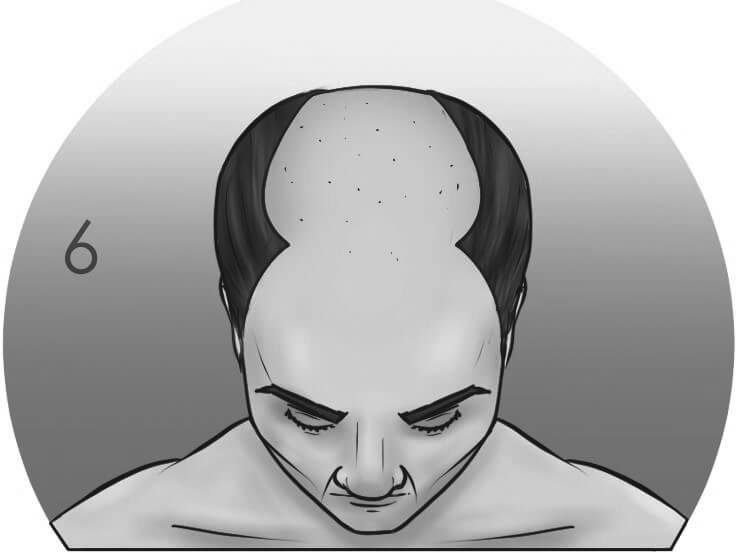
Norwood Stage 6 is marked by the disappearance or significant thinning of the band of hair between the two bald areas, resulting in a large bald region at the top of the head.
Stage 6 solution: A healthy donor area is essential at this stage. A minimum of 4,500 grafts is typically needed to restore a natural frontal hairline. Patients should have realistic expectations and may consider positioning the hairline slightly higher to achieve a dense, natural look. For full coverage, up to 6,000 grafts can be transplanted over two sessions. Continued use of medications and PRP treatments is recommended to support the transplanted hair.
STAGE 7 | 7000+ GRAFTS
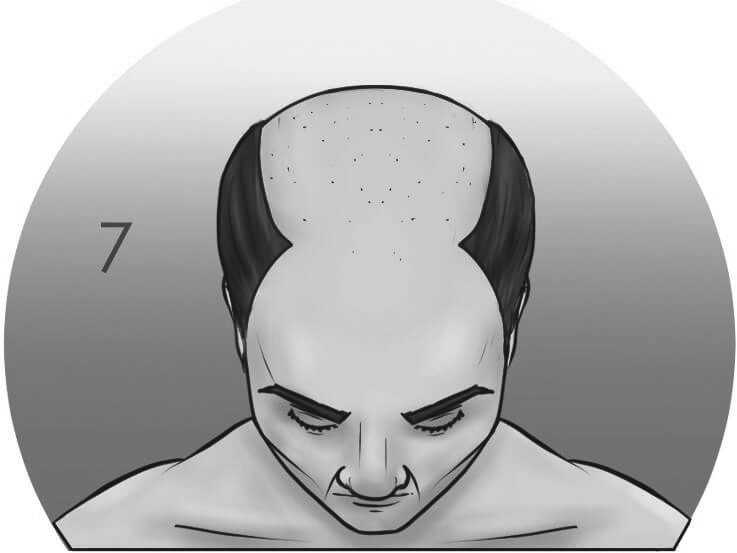
Norwood Stage 7 is the final and most advanced stage of male pattern baldness, where only sparse, thin hair remains at the sides, and the top of the head is completely bald.
Stage 7 solution: Full coverage typically requires a minimum of 7,000 grafts; however, not all patients are suitable for transplanting more than 6,000 grafts. For eligible patients, 7,000 grafts can be transplanted over two sessions. An alternative approach is to first transplant 6,000 grafts in two sessions, followed by a second procedure at least one year later to achieve fuller coverage.
How many hair grafts are available for a hair transplant?
The number of hair grafts that can be used in a hair transplant is limited by the donor area, where hair is genetically resistant to falling out, providing permanent results.
On average, a person has around 4,000 to 6,000 grafts available in the donor area, although this can vary from one individual to another.
One of the main cosmetic risks in hair transplantation is overharvesting, which occurs when too many grafts are taken, disrupting the natural appearance of the donor area.
Our medical team can help assess and estimate the number of hair grafts available in your donor area to ensure safe and natural-looking results.
How are extracted grafts allocated during a hair transplant?
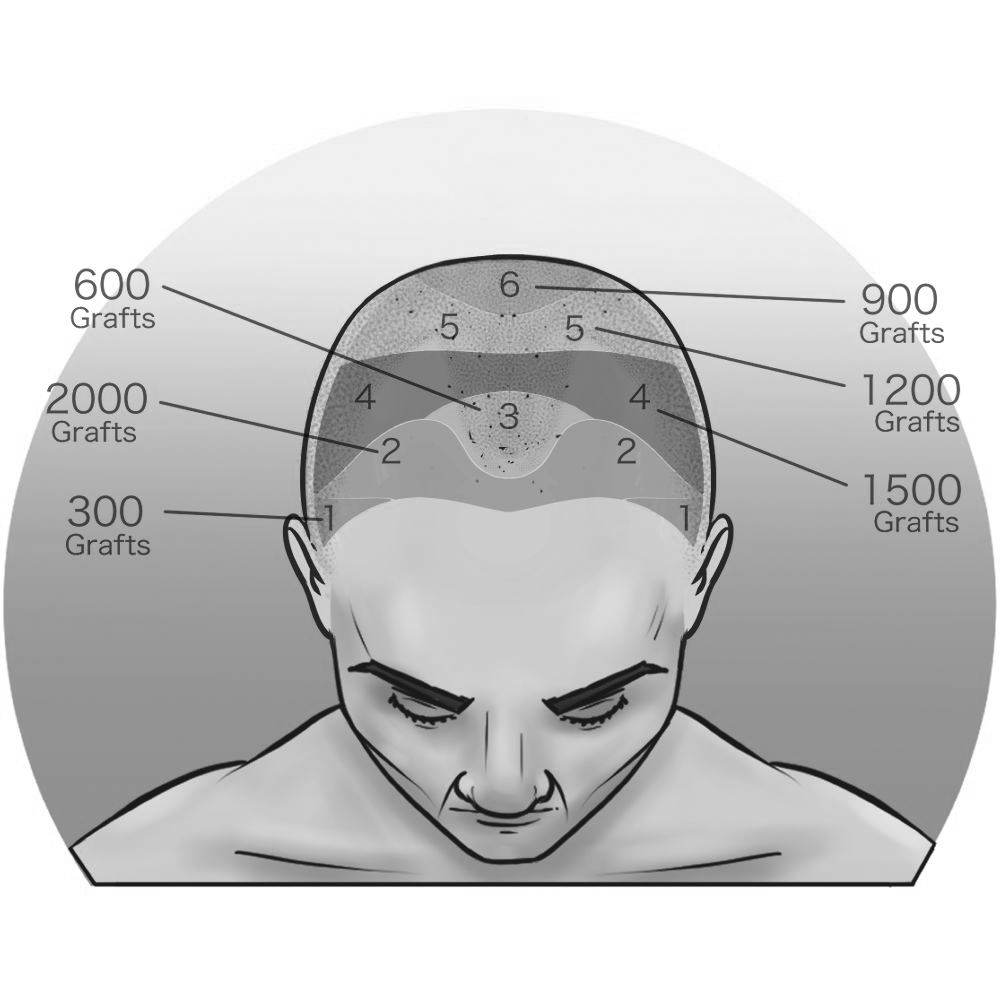
After determining the number of grafts needed and designing the new hairline, the next important step is planning how these grafts will be distributed across the scalp. Because every patient’s hair loss pattern is different, graft allocation must be customized to match their specific needs.
Our skilled surgeons evaluate factors such as facial structure, natural hairline shape, and overall aesthetic goals to create a tailored graft-placement strategy. This ensures a balanced, natural-looking result.
Below is an overview of how grafts are typically allocated across the scalp:
What are the treatment options?
Male pattern baldness is a widespread concern, and over the years doctors and researchers have worked to develop effective ways to manage it. As a result, several reliable treatment options are now available. The most commonly recommended treatments include medication, PRP therapy, and hair transplantation.
Medication

Over-the-counter medications are widely used to manage male pattern baldness. Many men opt for medication because it is convenient and non-invasive, though its effectiveness can vary from person to person. Currently, two main active ingredients are available: Minoxidil and Finasteride.
Minoxidil is applied topically to the scalp in the form of a foam or shampoo. It is typically used on damp hair and works by helping to slow or stop hair loss through its effect on DHT levels in the scalp. Full results may take six months or more to become noticeable.
Finasteride is an oral medication taken daily to reduce hair fall. Because it is taken systemically, some users may experience side effects. In addition, pregnant women should avoid using or handling crushed or broken tablets.
Always consult a medical doctor or pharmacist before starting any hair-loss medication.
PRP

Platelet-rich plasma (PRP) therapy is a non-surgical treatment designed to enhance hair quality and stimulate growth. It uses the patient’s own blood plasma—rich in natural growth factors—to strengthen and nourish hair follicles.
The PRP procedure involves three main steps:
- Drawing a small amount of blood
- Separating the plasma using a centrifuge
- Injecting the platelet-rich plasma into targeted areas of the scalp
PRP is known to encourage natural hair growth and is frequently used to support the treatment of male pattern baldness.
Hair Transplant

A hair transplant is one of the most effective treatments for significant hair loss. This surgical procedure involves extracting healthy hair follicles from the donor area and implanting them into the balding or thinning regions to restore a fuller, natural-looking appearance.
While several techniques exist, the most commonly used methods are Ice FUE (Follicular Unit Extraction) and DHI (Direct Hair Implantation). For individuals experiencing permanent hair loss, a hair transplant can provide a long-lasting and natural solution.
The procedure is performed under local anaesthesia, and the initial recovery typically takes a few weeks. Full results usually become visible between 9 to 12 months after surgery.