

Afro Hair Transplant in Ghana
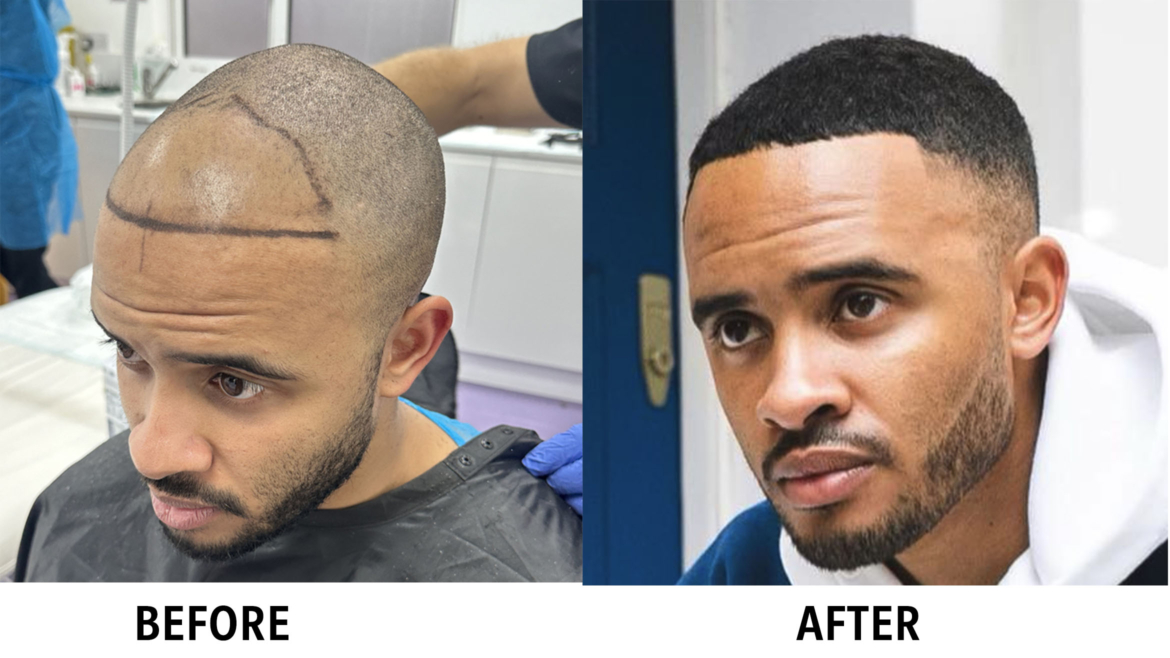
Hair transplants for Afro-textured hair can seem more challenging than for other hair types. Individuals of African, Black, or Afro-Caribbean descent typically have tightly curled hair, not just above the scalp, but beneath it. This unique curl pattern makes Afro Hair Transplant more complex. However, at Anasin Clinic in Ghana, our experienced ethnic hair transplant specialists are well-equipped to perform these procedures with precision and success.
Additionally, the cost of hair transplants in Ghana is significantly more affordable compared to Turkey, the United States, and other European countries.
Do Hair Transplants Work for Afro-Textured Hair?
The curly structure of Afro hair means that the hair roots cover a wider area under the skin. Traditional extraction methods can easily damage these roots, lowering the viability of transplanted follicles.
In the early years of hair transplant technology, tools and techniques used in both Follicular Unit Transplantation (FUT) and Follicular Unit Extraction (FUE) were not suited for Afro hair. This often led to poor results and visible scarring.
Thanks to modern advancements in hair transplant technology, successful procedures for Afro hair are now as achievable as for any other hair type. The naturally tight curls can help create the appearance of thicker, denser hair, often delivering outstanding results.
Hair Transplant for African Men
Male pattern baldness affects men across all ethnic backgrounds and is primarily caused by sensitivity to a hormone called DHT. As men age, rising DHT levels can cause hair follicles to shrink, leading to hair loss.
However, traction alopecia is more specific to African, African-American, or Afro-Caribbean men. This condition results from wearing tight hairstyles like cornrows, which can damage hair follicles over time. Although often irreversible, traction alopecia can be treated with a hair transplant.
This procedure must be performed by skilled surgeons who understand the importance of preserving the natural curl pattern. Correct implantation angles are crucial to avoid scarring and to ensure a natural appearance — something our team excels at.
Hair Transplant for African Women
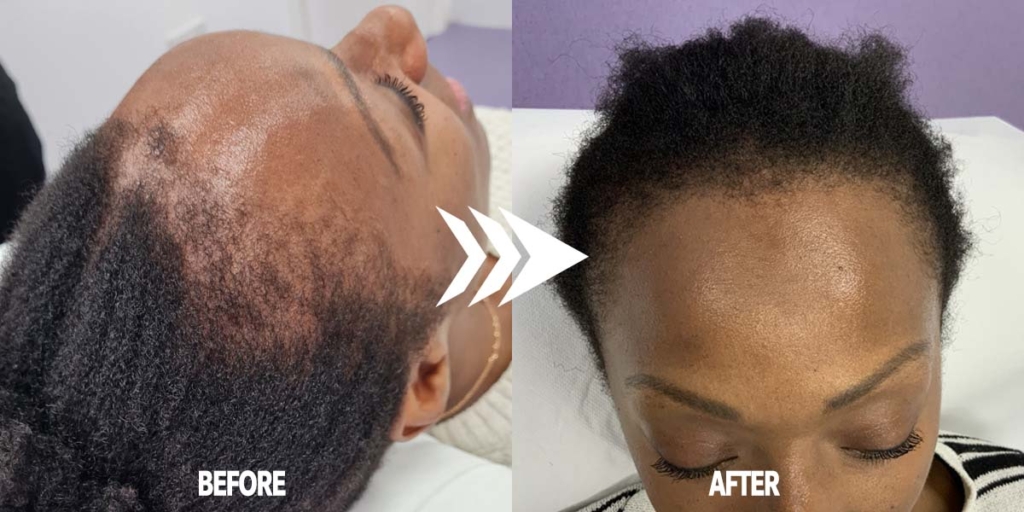
African women also frequently experience hair loss from hairstyles such as braids, weaves, buns, rollers, and cornrows. These styles can cause traction alopecia, leading to patchy hair loss around the hairline and damage to the follicles.
Most African women are good candidates for hair transplant surgery. However, due to the nature of Afro hair, the procedure must be performed by an experienced specialist. Achieving a natural result depends heavily on correctly placing the hair follicles in terms of both angle and direction. Additionally, because the roots of curly hair occupy more space, follicles must not be implanted too close together.
For those seeking immediate results or an alternative to a transplant, hairline lowering (forehead reduction) surgery may be a viable option.
At Anasin Clinic in Ghana, we specialize in professional hair transplants for African women. Our skilled surgeons consistently deliver outstanding results. Click here to learn more about female hair transplants.
Hair Transplant Techniques for Afro Hair
Depending on the patient’s case, both FUE and DHI methods can be used effectively for Afro hair transplants.
FUE Hair Transplant for Afro Hair
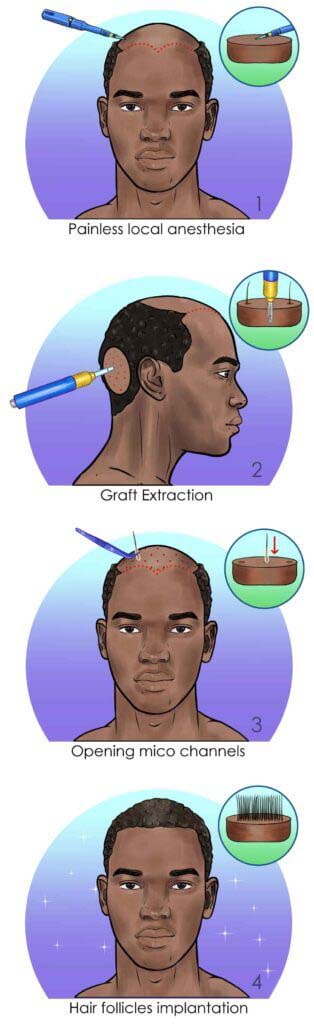
The Follicular Unit Extraction (FUE) method is one of the most widely used hair transplant techniques. It involves extracting individual hair follicles—typically from the back of the head—using a punch tool or manual punch, and implanting them one by one into the desired area.
For Afro hair, a punch tool with a wider tip is used to accommodate the curl pattern and minimize damage to the follicles, improving graft survival and overall coverage.
Is FUE Suitable for Black Men?
Yes, the FUE method is suitable for Black men, provided there are no chronic health issues and the procedure is performed by a surgeon with experience in Afro hair transplants. Because Afro hair has a distinct curl pattern, only specialized clinics can ensure optimal results.
DHI Hair Transplant for Afro Hair
Direct Hair Implantation (DHI) is a more recent advancement that builds upon the FUE technique. It uses a special tool called a Choi implanter pen, which allows for simultaneous extraction and implantation of hair follicles.
While DHI can improve follicle survival and simplify the process, it’s typically not the first choice for Afro-textured hair. However, it can be effective in certain cases when performed by highly experienced surgeons.
Cost of Afro Hair Transplant in Ghana
Hair transplants for Afro hair are much more affordable in Ghana compared to Turkey, Europe, or the United States.
If you’re considering a hair transplant but want to avoid high expenses, Anasin Clinic in Ghana offers an affordable and professional solution. Contact us today to get a personalized quote and begin planning your safe and effective hair restoration procedure.
Frequently asked questions
How long does it take for my hair to grow?
It takes approximately 10 days for hair follicles to adjust and capillary vessels to surround newly transplanted hair follicles. You should take good care of the transplanted area to help with the healing process according to your surgeon’s aftercare instructions.
For Afro hair type, the growth of transplanted hair can take up to 3-5 months. The full result becomes visible 10 – 12 months after your procedure.
Which hair transplant method is better for Black males?
Deciding on the most suitable hair transplant method for black males can be a challenging subject because the specifics of the surgery can change depending on the hair structure of each individual.
DHI hair transplant can offer great results because it allows effective extraction of hair follicles and quick transplantation procedure for smaller areas. Furthermore, the DHI method does not involve any incisions which reduce the risk of scarring at the donor area after the procedure. This means improved hair viability and successful hair transplant results.
On the other hand, the FUE method offers more control over the extraction process. Your surgeon can adjust the incision and extraction angle for each hair follicle and reduce damage to the hair roots. The manual punch method is especially recommended for more challenging hair types.
You might want to consult our medical team about the better hair transplant method for your hair type to achieve the best results possible.
Is black hair harder to transplant?
Black hair has a more complex structure, but it is not innately harder to transplant. It basically requires more practice to master the afro-textured hair transplant, making it harder to find the right surgeon for a Black hair transplant.
Is an Afro-textured hair transplant painful?
Since it is a surgical operation, people are usually concerned about how painful the operation would be. In reality, you don’t need to be worried about a painful procedure. Your surgeon will be using local anaesthesia to provide maximum comfort during the surgery.
Furthermore, as both FUE and DHI procedure does not involve any cuts or stitches, these procedures offer minimal discomfort and little to no pain during and after the operation.
Hair transplant surgeons in Turkey can provide quick and painless hair transplant results thanks to their expertise in the area.
Is an Afro hair transplant safe in Ghana?
With improved techniques such as FUE and DHI, hair transplant procedures have become safer over the years. Today, qualified surgeons specializing in African American, Afro-Caribbean or Black hair transplant in Ghana provide safe hair transplant operations. Surgeons experienced in hair transplant operations can shorten the procedure time which consequently reduces the potential risks during the operation.
Both FUE and DHI techniques pose low operational and post-surgery risks. After the surgery, you can experience mild sensitivity and redness during the healing process.